How ME Group Saved More Than 4,500 Customer-Support Hours.
How Hatch built a structured customer-care workflow that has saved over 4,500 hours for ME Group's UK support team.
The brief
Automate The Repetitive Preparation. Keep The Decision With A Person.
Refund requests depended on accurate location, machine, issue and transaction information. Hatch built the customer-facing intake and the data pipeline that validates and prepares each submission, giving the team a consistent record to review before it moves into a separate refund system.
- Client
- ME Group
- Industry
- Automated Self-Service & Retail Technology
- Services
- Custom Software, Workflow Automation, AI Classification
- Timeline
- UK delivery followed by an Irish rollout
- Status
- Live
The real problem began after the form was submitted
ME Group operates large networks of automated self-service equipment. When a customer requests a refund, the operations team needs enough accurate information to identify the service used, understand the problem, check the transaction and make a decision.
Capturing that information in an ordinary contact form would only move the work downstream. If locations were described inconsistently, transaction details arrived in different formats or essential fields were missing, a team member still had to interpret and clean the request before it could enter the refund process.
The UK team asked Hatch to improve that front end and the pipeline behind it. The objective was not to remove judgement from customer care. It was to remove avoidable preparation so that people could spend their time reviewing a consistent, usable request.
We designed the intake around the downstream decision
The workflow begins with the questions ME Group must answer, not with the fields that happen to fit a generic form builder.
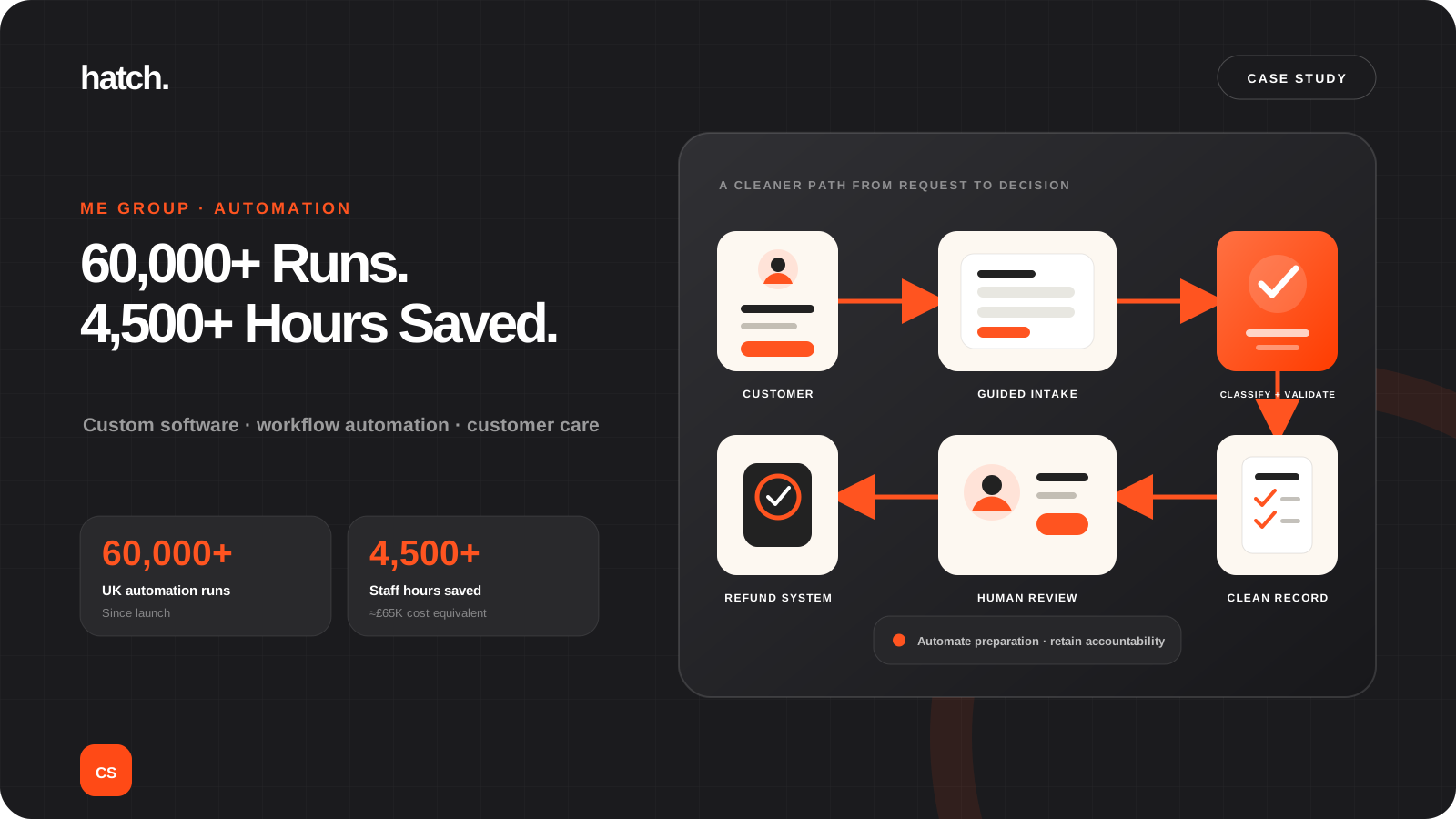
Customers can identify the relevant booth or washing machine from ME Group’s location data, describe the issue and provide the transaction value and supporting details. That guided journey reduces ambiguity at the point where the information first enters the system.
In the background, automation validates, standardises and prepares the submission. By the time it reaches the operations team, the information is in a more consistent structure and ready for review. Once approved, the record can move into ME Group’s refund software.
| Before | What changed | Operational purpose |
|---|---|---|
| Customers could describe locations and machines inconsistently | Connected the intake to structured location and equipment choices | Make each request easier to identify and investigate |
| Important refund details could arrive in different formats | Created guided fields, validation and standardisation rules | Reduce repetitive interpretation and data clean-up |
| Incoming issue types needed consistent categorisation | Added focused AI classifiers before the review stage | Give reviewers a more consistent starting point without removing human control |
| Raw submissions needed preparation before downstream processing | Built an automation pipeline that creates a consistent review-ready record | Give the team cleaner information at the point of decision |
| Full automation could remove necessary judgement | Kept a human approval step before the refund process | Improve efficiency without giving up operational control |
| The solution initially served one market | Adapted the workflow for the Irish operation | Reuse a proven model while respecting local data and requirements |
The system automates preparation, not accountability
This distinction is important. The Hatch-built workflow does not automatically decide that a customer is entitled to a refund, and it does not replace ME Group’s separate refund provider.
It handles the repetitive work around the decision: structured capture, validation, clean-up and preparation. A person still reviews the request and authorises the next step.
That is often where practical automation creates the most value. The goal is not to automate the greatest possible number of actions. It is to remove predictable friction while keeping human control where context, exceptions and financial decisions matter.
The workflow combines deterministic validation rules with focused AI classification. Classifiers categorise incoming submissions before review, while the wider automation validates and prepares the information for the support team. Together, these layers create a faster, more consistent operational handoff while keeping final approval with the people responsible for the decision.
A UK solution became a repeatable model for Ireland
The workflow was first delivered for ME Group’s UK operation. Once the team had used it and seen the value of cleaner, more consistent intake, the Irish business asked for the same model to be adapted to its own requirements.
That second rollout is a useful measure of the architecture. The solution was specific enough to solve the original operational problem, but structured well enough to be reused in another market rather than rebuilt from zero.
The system also remains maintainable. When a field, location source or process requirement changes, ME Group can return to Hatch for a focused amendment instead of replacing the entire workflow.
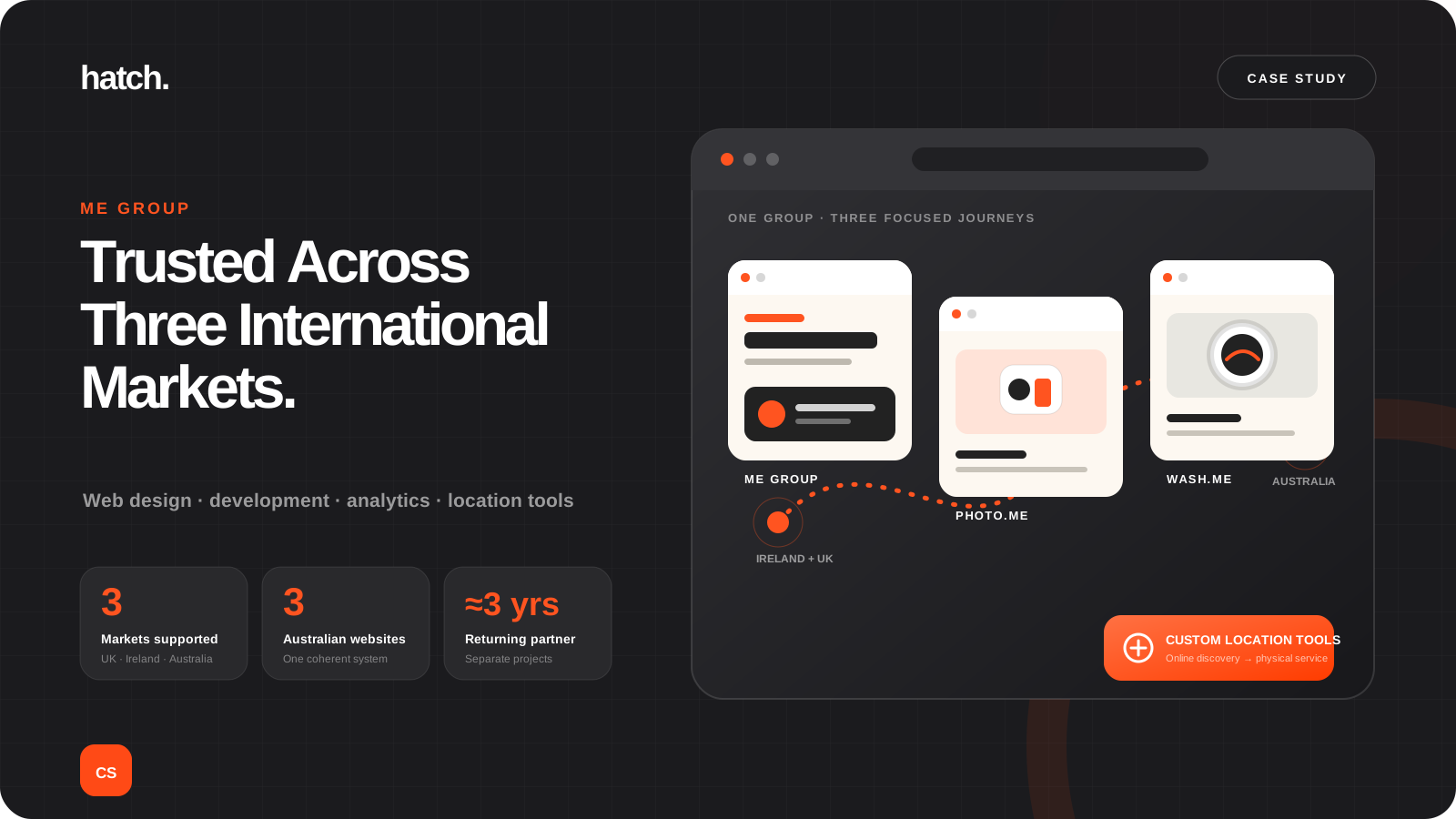
This sits inside a wider relationship spanning website, analytics, search and multi-market development work for ME Group. Jason Kavanagh, Manager at ME Group, described the UK and Ireland delivery in his public review as “high quality websites and seamless back office systems”, tailored to each country’s requirements.
More than 4,500 staff hours saved
Mirthyani Bezerra of ME Group Ireland said the work advanced the “digitisation of customer care”, streamlined processes and helped the team provide better service more efficiently.
The operational data puts real scale behind that outcome. In the UK alone, the system has saved more than 4,500 staff hours, structuring the intake, classifying submissions and preparing data before review.
That is time the support team can spend on the decisions, exceptions and customer situations that genuinely require human attention.
The value continues to grow every time the system runs. Instead of spending time interpreting inconsistent submissions and preparing information by hand, the support team receives a cleaner, categorised record and can focus on the decisions and exceptions that genuinely need human attention.
That is the commercial case for the project: one focused internal system now absorbs a high-volume, repeatable workload without requiring a matching increase in customer-support administration. Adapting the same model for Ireland extended the return on the original development rather than starting again from zero.
ME Group gained more than a digital form. It gained a reusable operational system that improves consistency, protects human oversight and creates measurable value at scale.
A practical model for customer-care automation
This project demonstrates where custom software earns its place. The problem was not a lack of another large platform. It was the gap between a customer’s raw request and the clean, structured information the existing refund operation needed.
By building precisely for that gap, ME Group gained a clearer customer journey, a more consistent internal handoff and a reusable workflow that could expand from the UK to Ireland.
Explore Hatch’s custom software service, see how we approach AI and workflow automation, or book a call to map a repetitive operational process.
Common questions
Frequently Asked Questions
What part of ME Group's refund process did Hatch build?
Hatch built the customer-facing refund intake and the background data-preparation workflow. It captures the relevant location, machine, issue and transaction details, then validates and structures the submission for human review and downstream processing.
Does the workflow automatically approve refunds?
No. The workflow reduces repetitive data capture and clean-up, but a member of ME Group's team retains final review and approval. The separate refund-processing platform remains outside the Hatch-built system.
How does AI support the refund workflow?
Focused AI classifiers categorise incoming submissions before review, working alongside validation and automation rules to create a faster, more consistent operational handoff while the team retains final approval.
How much customer-support time has the refund workflow saved?
The UK workflow has saved more than 4,500 customer-support hours through structured intake, classification and data preparation.
“Ben did an outstanding job assisting us at ME Group Ireland in developing our websites. He optimised them with SEO, provided insightful reports, and advanced our digitisation of customer care, streamlining processes to help provide better service more efficiently to our customers. We highly recommend Ben to anyone looking to elevate their websites.
Want A Result-Led Plan For Your Business?
Tell us what is underperforming. We’ll help you identify the most valuable next move—and say so plainly if we are not the right fit.